


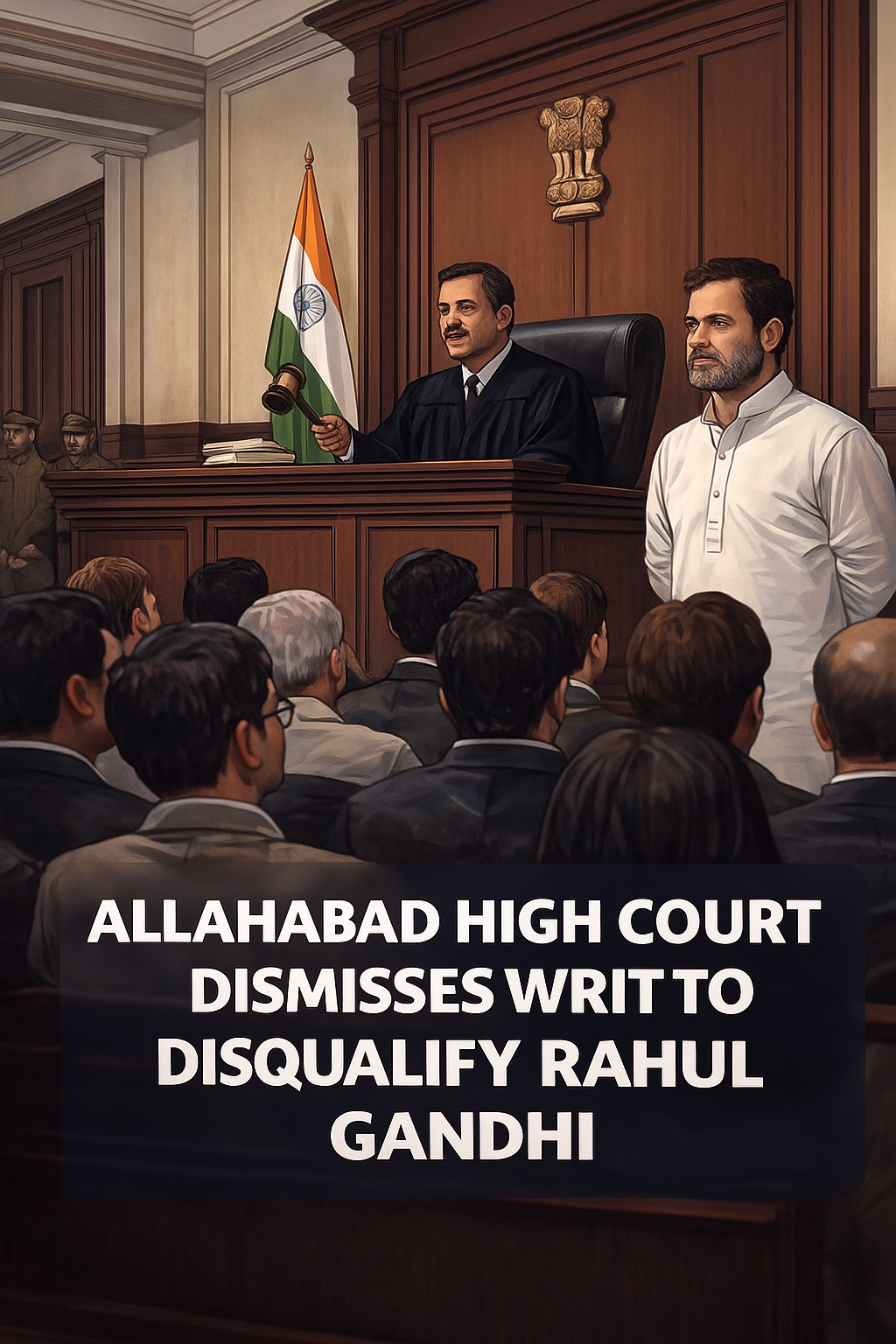
The Allahabad High Court, on 4 December 2025, dismissed a petition seeking to disqualify Rahul Gandhi as a Member of Parliament. The petition (Ashok Pandey v. Rahul Gandhi & Ors.) had challenged his election from the Raebareli constituency (in Uttar Pradesh) in the 2024 Lok Sabha elections, citing his 2023 conviction in a criminal defamation case.
Petitioner’s arguments
-
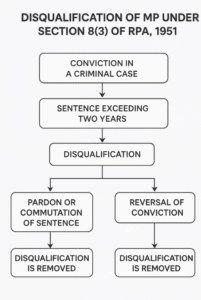
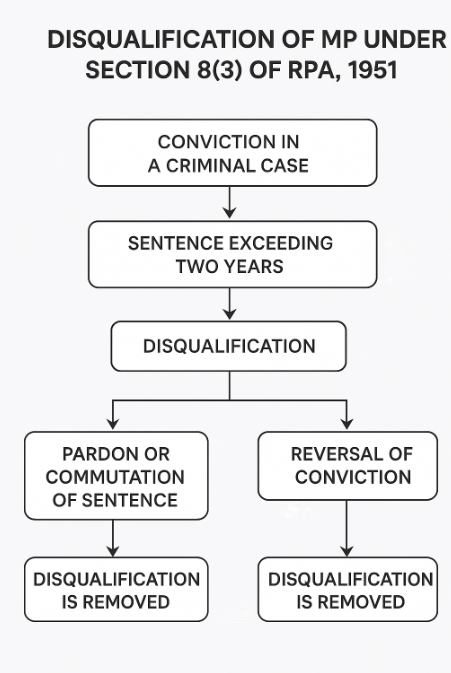
The petitioner contended that Rahul Gandhi’s 2023 conviction in a criminal defamation case, which carried a two-year sentence, attracted disqualification under Section 8(3) of the Representation of the People Act, 1951.
-
He argued that since the conviction existed on record, Gandhi was ineligible to file nomination papers for the 2024 elections, and therefore, the returning officer erred in accepting them.
-
He also cited the case of Afzal Ansari, claiming that in Ansari’s situation, the courts had granted express permission to contest, whereas no such explicit order existed in Gandhi’s case. The petitioner tried to draw a distinction that, without explicit permission, Gandhi continues to be disqualified.
Court’s reasoning
-
The Court held that the Supreme Court had stayed Rahul Gandhi’s conviction, not merely the sentence. A stay of conviction removes the legal consequences that normally follow, including disqualification under Section 8(3).
-
The Bench explained that a stayed conviction has no operative effect, meaning the candidate cannot be treated as disqualified for electoral purposes.
-
On the Afzal Ansari comparison, the Court clarified that the decisive factor is the legal effect of a stay on conviction, not the presence or absence of special wording about eligibility. Once a conviction is stayed, disqualification does not arise.
-
The judges noted that the issue was already settled in previous Supreme Court decisions, leaving no substantial question of law for the High Court to reconsider.
Outcome
The Court confirmed that Rahul Gandhi’s election remains valid because his conviction stood stayed at the time he filed his nomination. Legally, this is consistent with established principles: disqualification cannot operate when the conviction itself is suspended.
From a neutral standpoint, the ruling reinforces an existing legal position rather than establishing a new precedent. It does not comment on the merits of the original criminal case, and does not provide political endorsement. It simply applies the rule that a stayed conviction cannot be used to bar a candidate from contesting or holding public office until the final outcome of the criminal proceedings is determined.
Important legal principles reaffirmed
-
A stayed conviction cannot lead to disqualification from Parliament.
-
The Representation of the People Act does not bar a candidate whose conviction has been stayed.
-
Higher-court stays restore the candidate’s eligibility until the underlying criminal matter is finally decided.
-
Precedents like Lily Thomas v. Union of India continue to govern situations where convictions are stayed.
What this means now
Rahul Gandhi’s election from Raebareli remains valid. The High Court’s ruling confirms that the 2024 mandate stands, and the challenge based on the defamation conviction cannot survive. Another attempt to question his eligibility as an MP has now been dismissed.
Tell us your opinion in the comment section.