


Raman didn’t file a writ petition. He didn’t retain counsel. He didn’t know there was an undertaking given in his name before the Supreme Court of India.
But when that undertaking was violated, the Court noticed. And it acted.
Let’s back up.
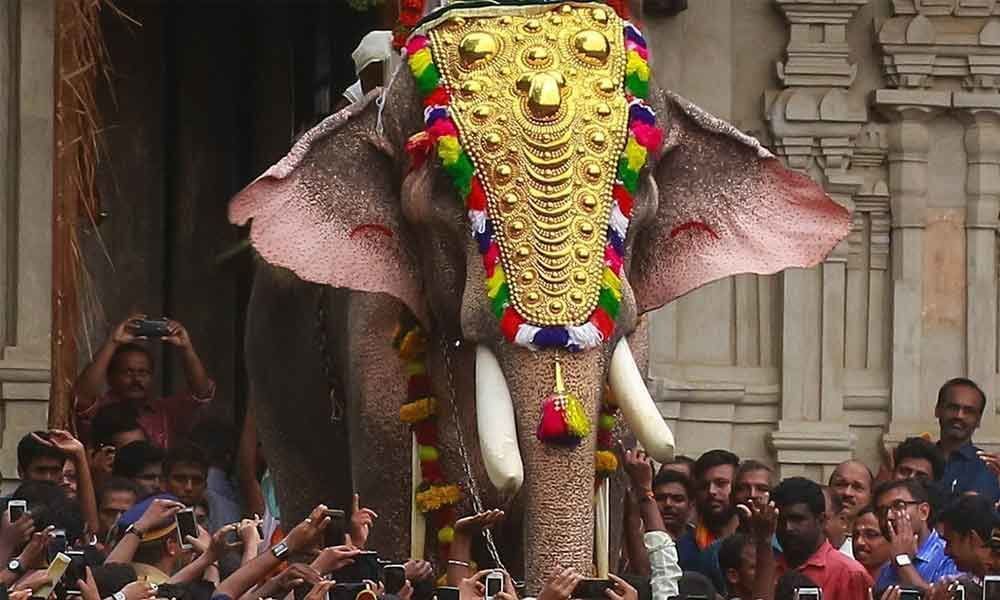
Raman is Kerala’s tallest captive elephant, and for the past several years he’s been stuck at the centre of a custody battle that reads like a property succession fight — except the subject of the dispute is a living animal who has zero say in the matter.
One side claims Raman belongs to the Mata Amritanandamayi Mutt and was only placed with a Kerala resident named Krishnankutty for upkeep. Krishnankutty, on the other hand, holds gift deeds from 2017 and calls the elephant his own. The fight has travelled from Kerala courts all the way to the Supreme Court, where criminal appeals are still pending.
In August 2025, while things were being argued, the Court did two things. It directed the Principal Chief Conservator of Forests to inspect Raman and submit a health report. And it recorded an undertaking from Krishnankutty’s counsel — Raman would not be used for any temple or commercial activity until further orders.
That second part is where things unravel.
When authorities finally conducted the inspection in February 2026, they didn’t find Raman at his keeper’s premises. They found him at Chavakkad, in the middle of a temple festival procession, doing exactly what the undertaking said he wouldn’t do.
The explanation: another elephant scheduled for the festival had fallen ill last minute. Raman was brought in as a substitute. It wasn’t commercial, the argument went. It was religious. Sentiment, not profit.
The bench of Justice Dipankar Datta and Justice Satish Chandra Sharma didn’t accept that.
An undertaking recorded before the Supreme Court isn’t a casual promise — it carries the weight of a court order. Breaking it is contempt. And that’s precisely what Krishnankutty was held guilty of. The apology he tendered, carefully worded as regret “in case” the act was perceived as a violation, was noted and set aside. The Court held the breach was real, not a matter of optics.
But the contempt finding almost felt secondary to what the bench actually said.
The Court pointed out that Raman — the tallest elephant in the state — had been sent into a festival procession despite a specific restraint, on the strength of a promise made before it. And then came this:
“We would be failing in our duty towards the voiceless, if we turn a blind eye towards such defiance. We cannot be a mute spectator, more so in matters pertaining to voiceless animals, whose wellbeing is also of paramount importance.”
That framing is doing real legal work. The Court isn’t treating Raman purely as property caught between two claimants. It’s treating his welfare as something the Court independently owes a duty to — separate from who eventually wins the ownership question.
This isn’t entirely new territory for Indian courts. There’s a slow but real expansion in how judicial forums have engaged with captive animals, particularly elephants — where wildlife law, anti-cruelty provisions, and constitutional values around life and dignity all pile up on top of each other. The Wildlife (Protection) Act, 1972 provides the frame. But it’s intervention like this that makes the frame mean something.
The order itself is straightforward. Kerala Government takes custody of Raman. He goes into a rescue or rehabilitation centre. The State maintains him under the Wildlife (Protection) Act, at its own cost. All of this holds only until the appeals are decided and interim custody is settled — it’s explicitly temporary.
So the ownership question is still open. The appeals continue. Raman’s legal fate isn’t sealed.
But he’s no longer with the person who violated a court undertaking to parade him through a festival. That shift matters.
The contempt fine — ₹2,000 — is a number that raises eyebrows. But contempt proceedings were never really about the money. The consequence that actually lands is this: the Court stepped in, removed Raman from someone who flouted its orders, and handed custodial responsibility to the State. That’s the substance.
The State authorities, for the record, were discharged from contempt entirely. They had tried to inspect Raman earlier but couldn’t — he was in musth at the time, which for a male elephant means a period of intense hormonal aggression where any handling is genuinely dangerous. The Court found no fault with them.
Raman is still, legally, property. Subject to gift deeds and ownership claims and custody hearings. That hasn’t changed.
But the Supreme Court’s language in this order keeps pushing at something beyond that framing. Welfare. Duty. The voiceless. It’s the kind of language that, case by case, slowly reshapes what courts think they’re actually there to do.
He still can’t speak for himself. But for now, someone is.
Jayakrishna Menon v. Krishnankutty & Ors. | 2026 LiveLaw (SC) 613