


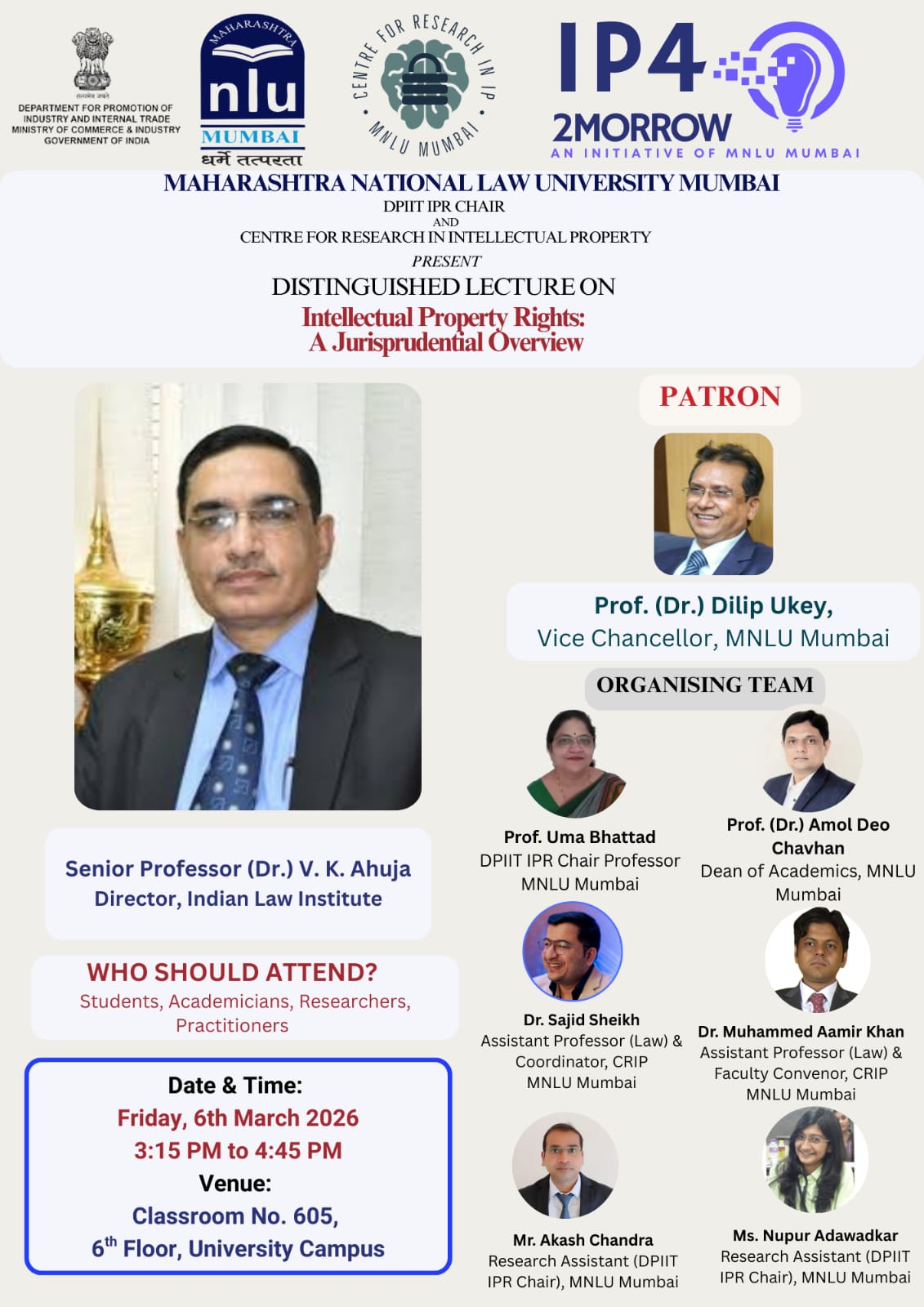
Maharashtra National Law University Mumbai, through its DPIIT IPR Chair and the Centre for Research in Intellectual Property (CRIP), organised a distinguished lecture on “Intellectual Property Rights: A Jurisprudential Overview” on 6 March 2026. The lecture was delivered by Senior Professor (Dr.) V. K. Ahuja, Director of the Indian Law Institute, who shared valuable insights into the legal foundations of intellectual property law. The session brought together students, researchers, and academicians to engage with the evolving jurisprudence of intellectual property rights.
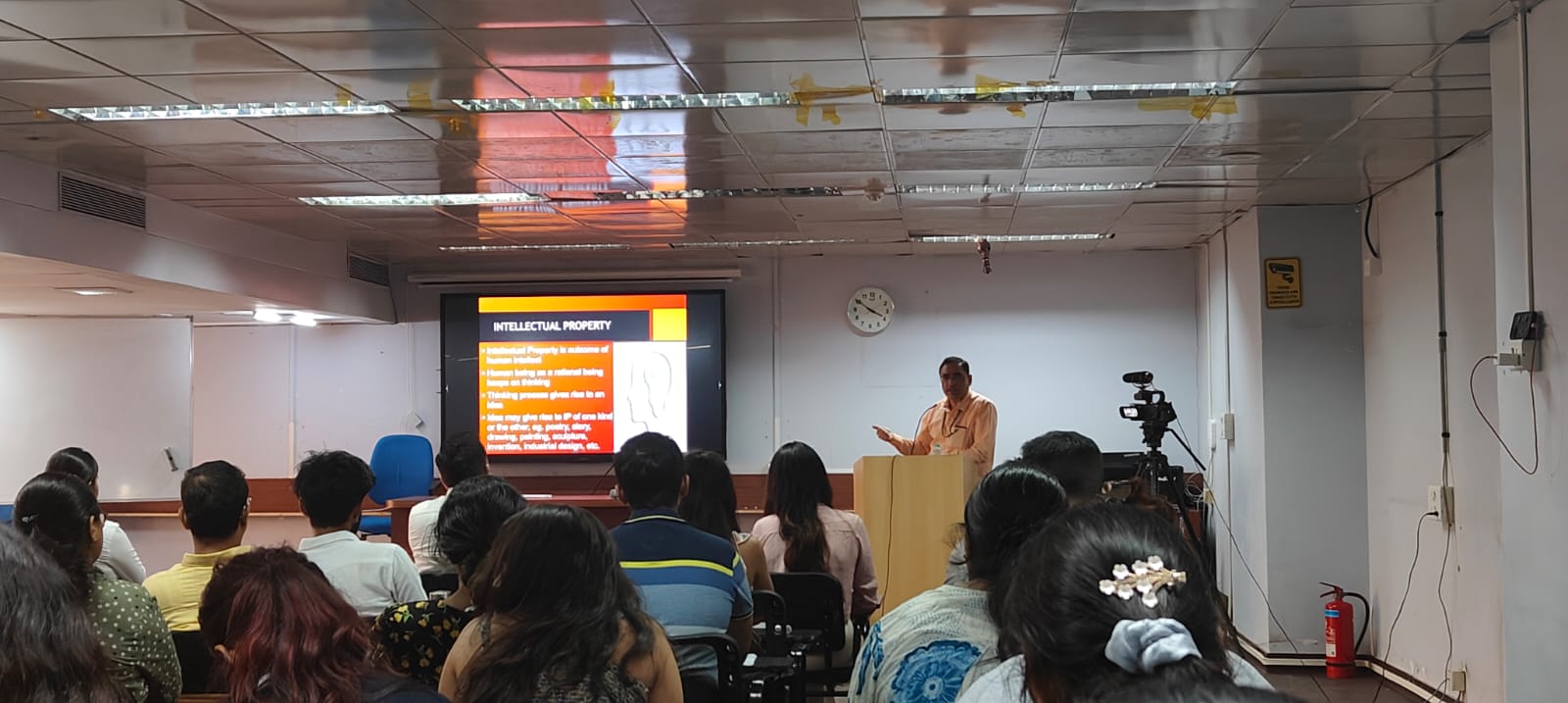
The lecture started with Dr. Ahuja explaining how we touch IPR in our everyday lives, whether it be wearing clothes of a certain brand, or drinking coffee of Nescafé, carrying an Android or iOS phone, etc
He explained how intellectual property is an outcome of the human mind, and IPR also showcases a nation’s ability to convert an idea into a material shape and create and generate value.
On a lighter note, he asked the attendants not to disclose their ideas as they can be worth a good amount of money.
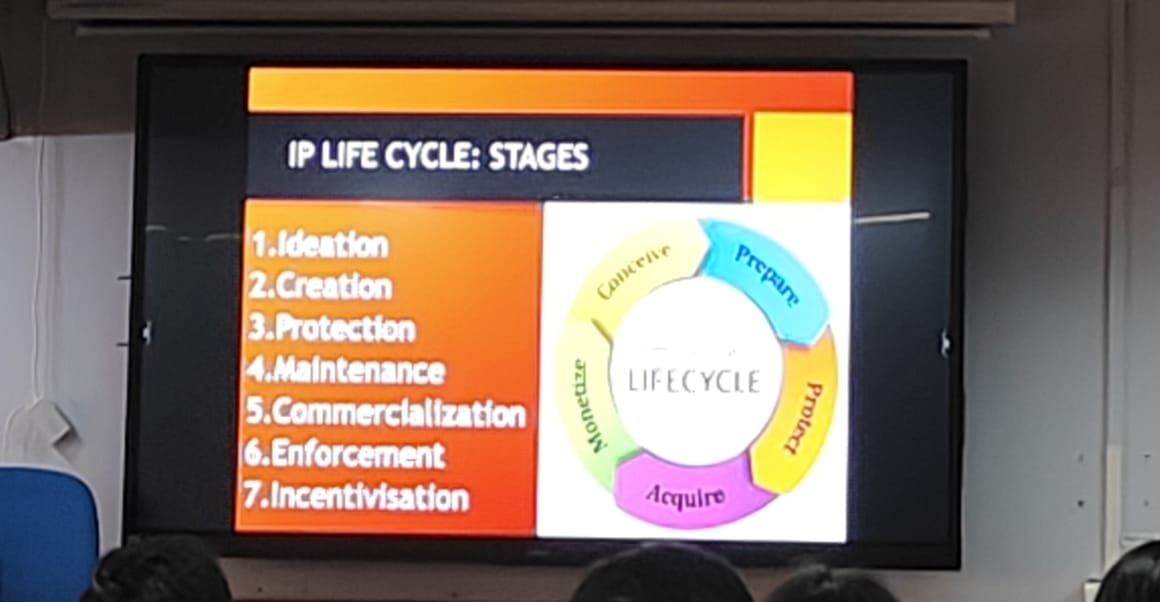
Further, the concept of the IP life cycle was explained.
Under copyright, Dr Ahuja explained about the economic rights, performers’ rights and broadcasters’ rights.
He also shed light on section 52 of permitted uses and exceptions of fair uses.
He explained why registration is optional, but still preferably opted, especially by filmmakers and writers, and also explored on process of registration and duration for which it is valid.
Sir also pointed out that for a unique design, the quality doesn’t matter, but just a novel idea is sufficient.
Moving forward, trademark and non traditional trademark were explained and examples were shown on how companies use deceptive similarity which equals to passing off. For interactive discussion, sir also showed certain deceptive logos which we encounter in everyday life.
Then Dr. Ahuja explained the concept of Geographical Indications. He cited an example of Darjeeling tea and how it has GI for certain special characteristics, qualities or reputation
Alongside, patents were explored along with its time period and how it is different than invention. He discussed about plant varieties and touched on the criteria for registration. He also spoke about farmer’s rights and how Plant Varieties Act maintains balance between plant breeders and farmers.
Similarly, layout designs for integrated services were discussed and how TRIPs agreement make certain obligations.
For a comprehensive view, the idea of combination of various IPRs was discussed. It showed how IPR laws don’t exist in a vacuum and how one product may need several registrations in different branches of IPR.
Lastly, there was a discussion on National IPR Policy 2016, and how over the years IPR has evolved for the better good of the country through innovation and development.
The session proved to be highly insightful, offering participants a deeper understanding of the jurisprudential foundations of intellectual property rights. Overall, the lecture served as a valuable academic engagement for students and researchers interested in the dynamic field of intellectual property law.
Authored by Yashika Paraswani, Managing Editor