


Whose Flame Is It Anyway?
The Thirupparankundram Deepathoon Case and the Battle Between Faith, History, and Law
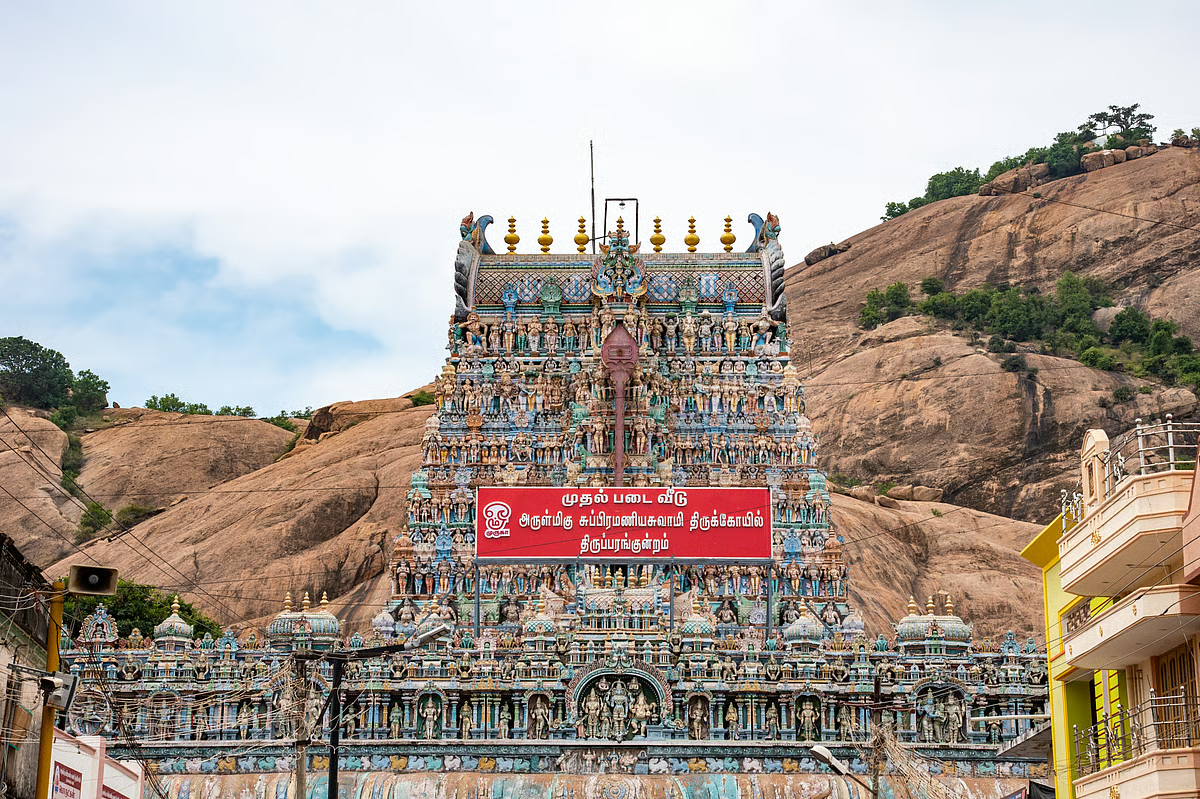
Every December, Tamil Nadu glows with lamps. Streets shimmer, homes flicker with earthen diyas, and hills become symbols of divine light. Karthigai Deepam is not just a festival; it is an emotion deeply rooted in Tamil cultural life.
But what happens when a flame meant to unite becomes a legal flashpoint?
That is exactly what unfolded at Thirupparankundram Hill in Madurai, where a centuries-old stone pillar, a deepathoon, became the centre of a serious constitutional and cultural debate.
The Dispute: A Pillar, A Festival, A Question of Ownership
The controversy began when the Tamil Nadu government informed the Madras High Court that the deepathoon located on Thirupparankundram hill is of Jain origin, and therefore should not be used for lighting Karthigai Deepam, a Hindu religious ritual.
This submission was made in opposition to a Single Judge’s order of the Madras High Court that had allowed Karthigai Deepam to be lit not only at traditional locations on the hill but also at this specific stone pillar.
The order triggered appeals from multiple stakeholders, especially Jain groups, who argued that the decision overlooked the historical and religious identity of the structure.
At the heart of the case lies a deceptively simple question:
Can a religious ritual be performed on a structure that historically belongs to another faith?
Understanding the Deepathoon: More Than Just a Stone Pillar
The deepathoon is not merely a convenient platform to light a lamp.
According to archaeological and literary evidence, the pillar is historically associated with Digambara Jain ascetics who once inhabited Thirupparankundram hill. These monks are believed to have used such stone pillars for lighting lamps during nocturnal religious gatherings, a practice consistent with Jain monastic traditions.
What strengthens this claim is the presence of similar Jain stone pillars at:
- Samanar Hills in Tamil Nadu, and
2.Shravanabelagola in Karnataka, one of Jainism’s most significant pilgrimage sites.
This places the Thirupparankundram deepathoon firmly within a broader Jain cultural and historical landscape, rather than Hindu temple ritual practice.
Thirupparankundram Hill: A Living Example of Religious Coexistence
Importantly, Thirupparankundram hill is not exclusive to one faith.
Over centuries, it has been a site where Hindu, Jain, and Islamic traditions have coexisted, making it a rare symbol of shared sacred space. The dispute, therefore, is not about denying anyone faith, but about preserving the historical identity of religious markers within a shared space.
Karthigai Deepam: Faith, Fire, and Collective Memory
Karthigai Deepam is among the most significant festivals for Tamils. It symbolises the Jyothi of Lord Shiva, believed to have appeared as a pillar of fire.
The lighting of the Deepam atop Tiruvannamalai hill marks the formal beginning of the festival across Tamil Nadu. Only after this sacred flame is lit do temples and households across the State light their lamps.
The festival is marked by:
Rows of earthen lamps,
Traditional sweets like Adhirasam,
Bonfires, and
Community participation cutting across religious lines.
Ironically, Karthigai Deepam itself often becomes a symbol of communal harmony, making the present dispute all the more sensitive.
The Legal Tension: Living Faith vs Historical Preservation
Legally, the case brings into focus a recurring constitutional challenge:
Article 25 protects freedom of religion and religious practice.
At the same time, the State has a duty to protect minority cultural and religious heritage.
The key issue is whether long-standing usage can override historical identity, or whether historical attribution must limit present-day religious use.
If religious practices are allowed to gradually overwrite minority heritage, does it amount to silent appropriation?
And if historical claims completely freeze living traditions, does it stifle cultural evolution?
These are not easy questions. But they are necessary ones.
Why This Case Matters Beyond Thirupparankundram
This is not just about one festival or one pillar.
The outcome of this case will influence how Indian courts:
Treat shared religious spaces,
Balance majoritarian practices with minority rights, and
Interpret secularism not as separation, but as respectful coexistence.
It reminds us that faith thrives best when history is acknowledged, not erased.
Conclusion: A Flame That Must Illuminate, Not Divide
The Thirupparankundram deepathoon case forces us to confront an uncomfortable truth: harmony is not automatic. It requires conscious legal and social restraint.
As the Madras High Court examines the appeals, the real test is not whose ritual prevails, but whether India’s constitutional promise of pluralism continues to hold steady, even when the stakes are emotionally charged.
After all, a flame meant to symbolise light should never cast shadows over another’s history.