


The Supreme Court today registered a suo-moto case over the NCERT textbook’s mention of ‘corruption in the judiciary.’ CJI Surya Kant said that no one will be allowed to defame the institution of judiciary, and appropriate action will be taken.
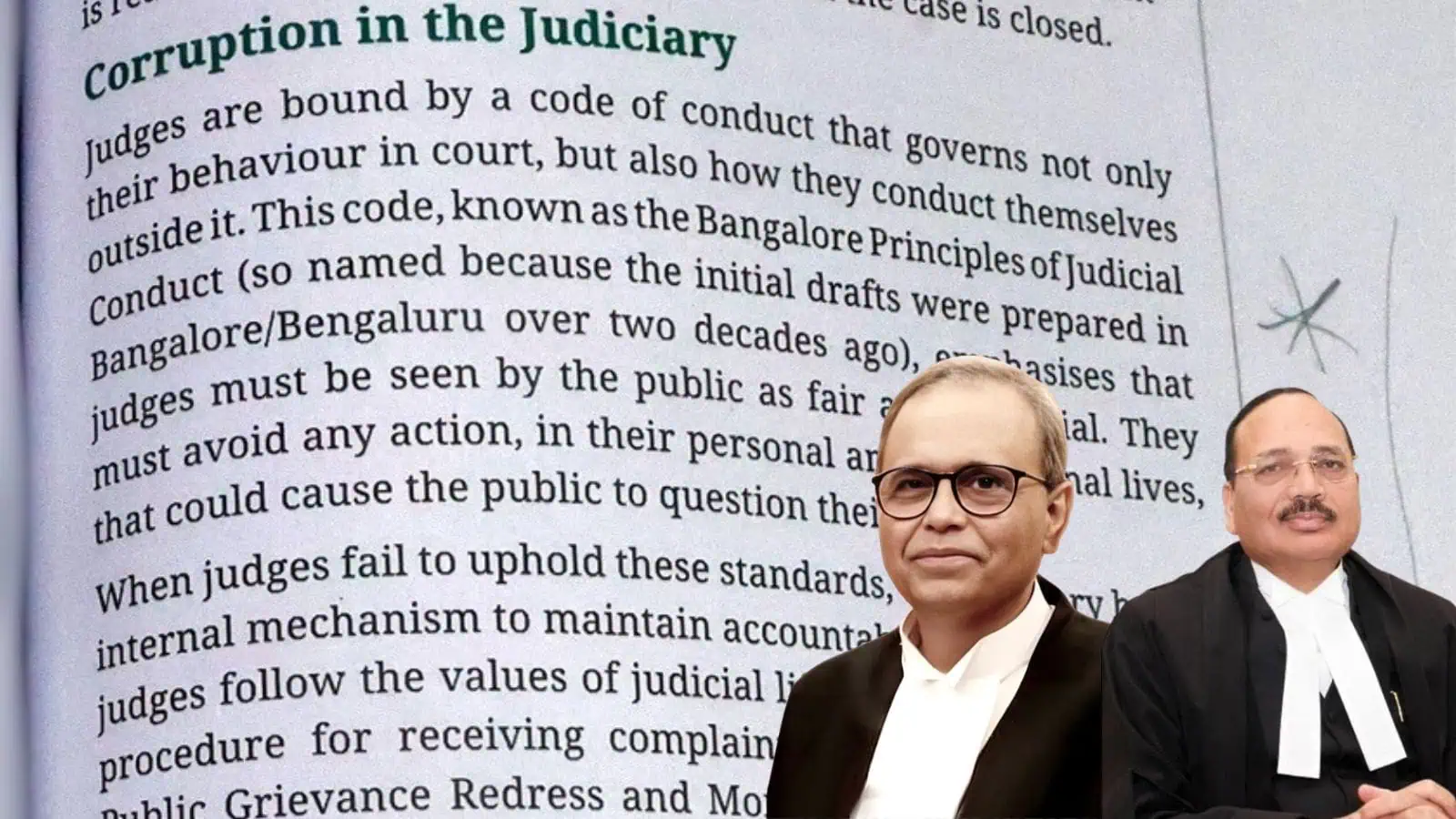
Senior advocate Kapil Sibal and Dr Abhishek Manu Singhvi mentioned this issue before the CJI and said that the textbook section seems to point out corruption in the judiciary as if it does not exist in any other sector. The CJI mentioned that he is aware of the concern and how ‘perturbed’ the bar and bench are. Further, the CJI also thanked Sibal and Singhvi for bringing up this issue. The section was called to be a deep-rooted and calculated attack on the judiciary.
The chapter in the NCERT is titled “The Role of the Judiciary in Our Society”, and it says that around 81,000 cases are pending before the Supreme Court and over 6 million are pending before the High Courts, due to reasons like shortage of judges, complex legal procedures and inadequate infrastructure. It also sheds light on how corruption affects judicial credibility.
If we keep this case aside for a moment and look at the reality around us, not everything is quite black and white. There is an extreme case backlog and high vacancies in judicial positions. Also, the collegium system is frequently criticised for lacking transparency and promoting nepotism. But at the same time, the CJI from time to time has stated that the institution’s integrity will be protected and that the law will take its course.
What needs to be kept in mind is that corruption is a universal, persistent problem present across all systems due to human impulses such as greed and desire for power. But cultivating personal integrity and dealing with it through honest and systematic measures must be prioritized over any sort of deflection.