


“The expression ‘right to propagate religion’ under Article 25 of the Constitution, as interpreted in Rev. Stainislaus, does not extend to converting another person through inducement, force, or fraudulent means. The Act of 1968 prohibits such activities.”
– Supreme Court in Digbal Tandi v. State of Chhattisgarh
The Supreme Court of India dismissed the plea filed by Christian individuals challenging the Chhattisgarh High Court’s judgment that enabled tribal villages have the right to restrict the entry of missionaries or outsiders for religious propagation, if the community decides so.
The Supreme Court did not overturn or dilute the High Court’s reasoning. By expressing refusal to interfere, it upheld the HC’s view.
Now the essential question arises: what happens when faith and freedom collide? How does the judiciary of India respond to it and ensure that no fundamental rights are curtailed, whether it be the right to propagate religion, the right to equality, or, for that matter, freedom to move freely throughout the territory of India? Let’s have a look!
Background of The Case
The case of Digbal Tandi v. State of Chhattisgarh [the present case]arose when certain villages in Chhattisgarh imposed restrictions on the entry of Christian missionaries and pastors to prevent religious conversions due to brainwashing or manipulation of any kind. The resolutions were passed by the Gram Sabhas, and consequently, hoardings were put up in scheduled areas cautioning against religious conversion activities.
Digbal Tandi, the petitioner and a Protestant Christian, challenged the restrictions in the Chhattisgarh High Court, arguing that the village council’s decision, recognised as a local self-governing body, violates fundamental rights to freedom of religion and movement.
The Judgement
The high court dismissed the petition, calling it a “precautionary measure to protect the indigenous tribes and local cultural heritage”.
Consequently, the matter was brought before the Supreme Court, where the bench comprised Justice Vikram Nath and Justice Snadeep Mehta. However, the Supreme Court upheld the High Court’s order, considering the impact on social harmony and tribal cultural identity.
Analysing Article 25-28 And The Limits of Religious Freedom in Tribal Areas
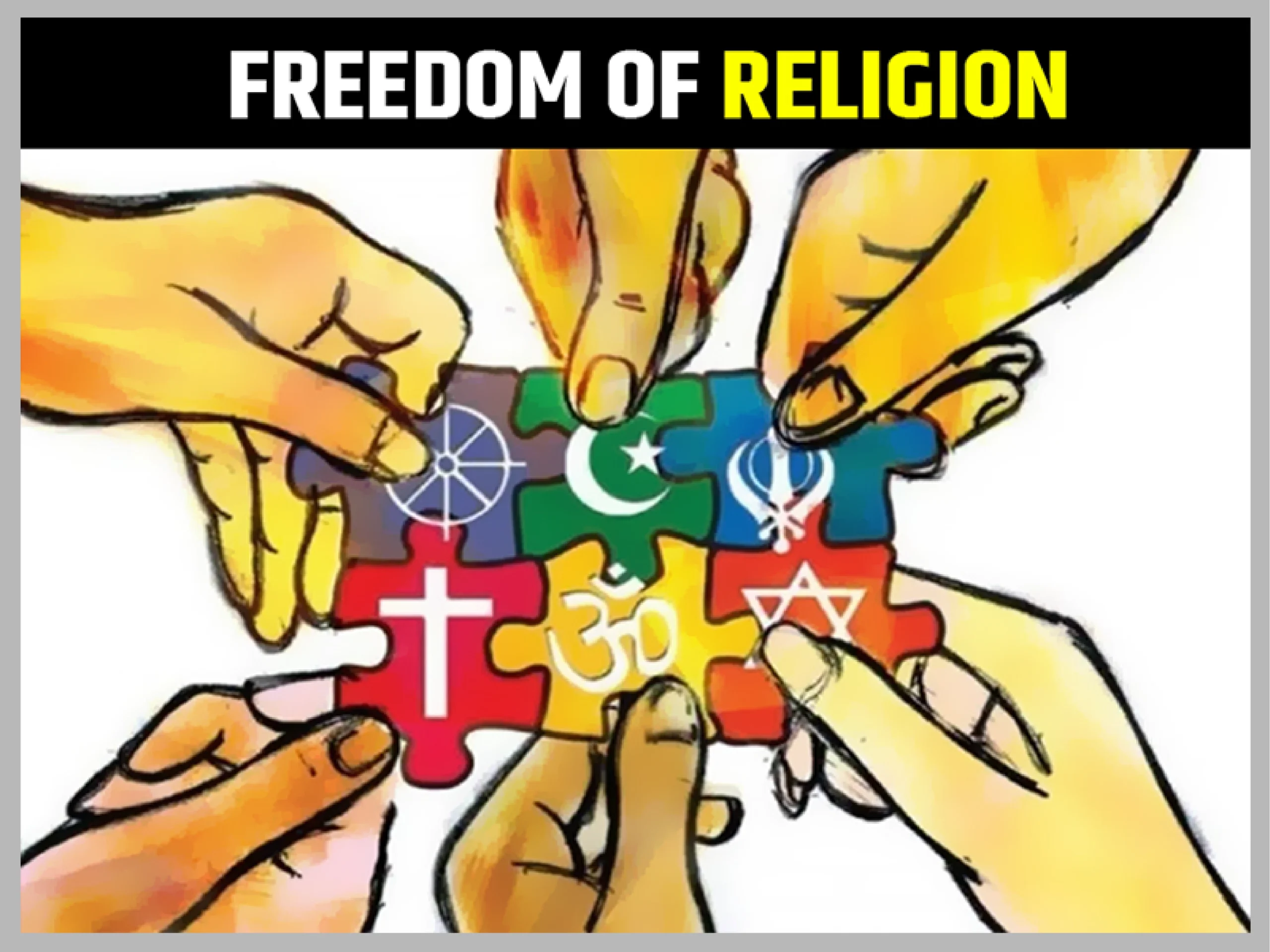
Articles 25 to 28 guarantee religious freedom, but this freedom is never absolute. The present case before the Supreme Court brings out how these provisions work in relation to each other. Here’s how-
Article 25: Freedom Subject to Consent and Context
Article 25 guarantees the freedom of conscience and the right to profess, practise, and propagate religion. However, the provision itself makes this right subject to public order, morality, health, and other fundamental rights. By refusing to interfere with the High Court’s view, the Court reaffirmed that propagation does not include the right of physical access to every community.
Article 26: Community Rights Are Not Exclusive to Organised Religions
Article 26 protects the rights of religious organisations to manage their own affairs. While it is usually invoked by institutional religions, the logic of community autonomy underlying Article 26 strengthens the argument that tribal communities too possess collective religious and cultural interests.
Article 27: No State Sponsorship, No State Suppression
Article 27 prohibits the State from compelling citizens to pay taxes for the promotion of any particular religion. In this case, the restrictions upheld were not imposed by the State, but emerged from Gram Sabha decisions. The absence of state sponsorship or coercion ensures that Article 27 remains unviolated.
Article 28: Secular Spaces and the Idea of Voluntary Exposure
Article 28 restricts religious instruction in state-funded educational institutions and emphasises voluntariness in religious exposure. This principle resonates with the present case: just as individuals cannot be compelled to receive religious instruction, communities cannot be compelled to receive religious propagation.
Conclusion
By upholding the right of tribal villages to regulate entry for religious propagation, the Court has clarified that propagation under Article 25 operates within the boundaries set by public order, and the principle of voluntariness reflected across Articles 26 to 28.
Ultimately, the case does not ask whose religion must prevail, but who gets to decide. The answer offered by the Court is clear: the Constitution protects faith, but it equally protects the freedom of vulnerable communities to preserve their way of life.