


Why the U.S. Remark on Greenland Is a Legal Problem, Not Just a Political One
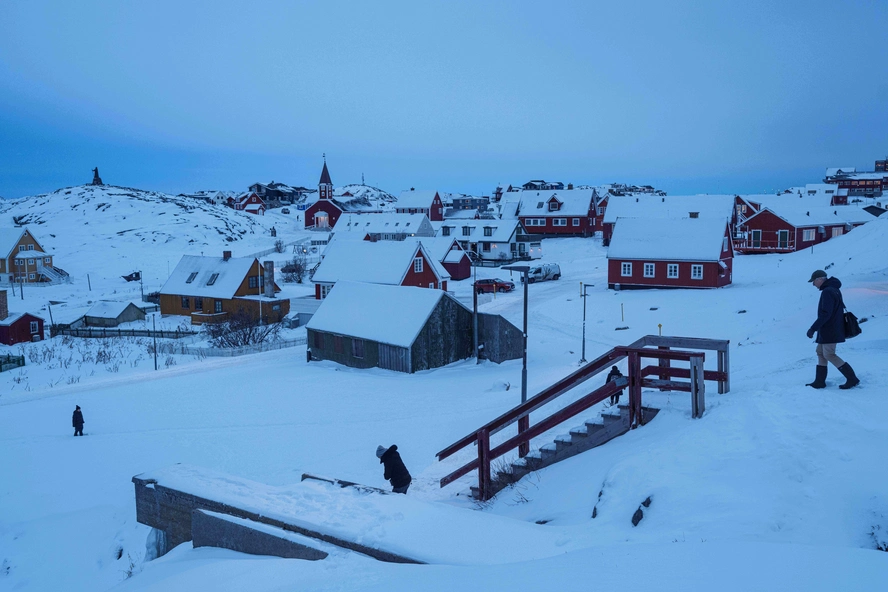
When U.S. leaders speak about “buying” Greenland, it may sound casual or symbolic. But in international law, words from powerful states carry weight, and this remark crosses legal lines.
Greenland is not empty land.
It is an autonomous territory within Denmark.
More importantly, it is home to people who have the right to decide their own future.
Under Article 2(4) of the UN Charter, states must respect the territorial integrity of other states. You cannot claim, threaten, or negotiate another country’s land simply because it suits your strategic interest.
Even more basic is the right to self-determination.
This right is recognised under Article 1 of the UN Charter and international human rights treaties. It means one simple thing: people are not for sale.
The International Court of Justice has been clear on this.
In the Western Sahara Advisory Opinion (1975), the Court said territory cannot change hands unless the people concerned freely agree. Strategic value or historical arguments do not override consent.
The same principle was reinforced in East Timor (1995). Self-determination is not optional. It is a duty owed to the world.
Some defend the remark by pointing to the Alaska purchase. But that happened in a different era. Modern international law exists precisely to reject colonial practices. Today, land is not property. Sovereignty is not a transaction.
There is also the rule of non-intervention, affirmed in Nicaragua v. USA (1986). States must not interfere in the internal affairs of others. Publicly floating claims over Greenland interferes with both Denmark’s sovereignty and Greenland’s autonomy.
The future implications are serious. Such remarks weaken international law as they give dangerous ideas legitimacy, and if powerful states can speak this way, others will follow.
They also destabilise the Arctic- a region already under pressure from climate change and military competition does not need sovereignty disputes added to the mix. Most importantly, they send the wrong message, that power matters more than consent, and people come after strategy.
International law allows cooperation, it allows alliances, and it allows investment. What it does not allow is treating territory like a commodity and people like an obstacle.
Greenland is not for sale, and international law is not optional.