

-
Background of the U.S.–Venezuela Crisis
On 3 January 2026, the United States attacked Venezuela, capturing Venezuelan president Nicolás Maduro and his wife Cilia Flores. The attack was codenamed “Operation Absolute Resolve”. Trump and his administration have justified the operation as a law-enforcement action, and Trump has also stated that the US would “run” Venezuela until there was a transition of power. The US has accused Maduro of electoral fraud and of presiding over a “narco-state”.
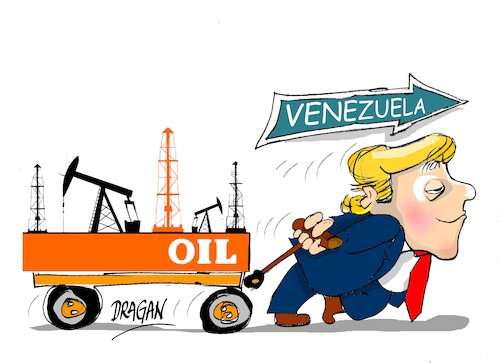
It is important to note that Venezuela has the world’s largest oil reserves, estimated at 300 billion barrels, which is more than even Saudi Arabia. The 2025–2026 operations are seen by the Trump administration as serving the triple goals of a) crippling Maduro, b) disrupting drug trade routes, and c) getting access to Venezuela’s oil.
The United Nations Security Council emergency meeting is underway in New York to discuss the US operation in Venezuela and the capture of President Nicolas Maduro. The meeting has been convened at the request of Colombia, backed by China and Russia, with the agenda set as ‘Threats to International Peace and Security’.
-
The UN Charter Framework
The United Nations Charter establishes a strict legal framework governing the use of force and the preservation of state sovereignty. At its core lies Article 2(4), which prohibits states from using force against the territorial integrity or political independence of any other state. This prohibition is widely regarded as a cornerstone of modern international law and reflects customary international law as well.
Closely linked to this is Article 2(7), which prohibits intervention in matters that fall within the domestic jurisdiction of a state. Together, these provisions uphold the principles of sovereign equality and non-intervention, ensuring that no state, regardless of power, may unilaterally impose its will on another. The rule is simple- Right over Might.
-
Lawful Justification for the Use of Force
International law recognises only three narrow exceptions to the prohibition on the use of force: self-defence, consent of the territorial state, and authorisation by the UN Security Council.
Self-defence, under Article 51 of the UN Charter, is permitted only in response to an actual or imminent armed attack. The threshold for invoking self-defence is high, requiring necessity and proportionality. Mere political instability, alleged criminal conduct of foreign leaders, or economic threats do not satisfy this standard under international law.
Consent provides another possible justification, but it must be clearly expressed by the lawful government of the concerned state.
The third justification is Security Council authorisation under Chapter VII of the UN Charter. Such authorisation grants legitimacy to the use of force in response to threats to international peace and security. Eg- After Iraq invaded Kuwait in 1991, the Security Council authorised member states to use “all necessary means” to uphold earlier resolutions demanding Iraq’s withdrawal. This was Security Council Resolution 678 (1990).
-
Assessing U.S. Actions Under International Law
The United States has framed its actions in Venezuela as a form of enforcement rather than intervention. However, international law does not recognise a general right of unilateral enforcement by individual states. The prohibition on the use of force under Article 2(4) is not conditional upon morality or mere allegations.
If this logic is carried on, it will have dangerous implications. Russia would justify its invasion of Ukraine as an enforcement action to protect ethnic populations. China could take over Taiwan under the guise of territorial integrity. Such a justification clearly distorts the distinction between lawful enforcement and unlawful intervention.
Several legal experts have said the US broke international law by taking Maduro out of Venezuela on its own.
“A country cannot go into another foreign country and arrest people,” said Milena Sterio, an expert on international criminal law at Cleveland State University College of Law. “If the US wants to arrest someone in another country, the proper way to do that is extradition.”
The UN slogan says- “Peace, dignity and equality on a healthy planet.” Normalising unilateral action undermines each of these values. Peace becomes conditional, dignity becomes partial, and equality becomes just a mere idea. Therefore, such an act should not be normalised in any way, regardless of the country’s strength.
-
Implications on Developing Nations
The most serious consequence of unilateral action by powerful states is its impact on smaller and developing nations. When a major power bypasses the law and acts on its whim, it creates a dangerous precedent. Smaller states lack the economic, military, or diplomatic capacity to resist similar actions or to respond in kind, and there is a lot of legal uncertainty.
That’s not it. President Donald Trump has gone on record with warnings and threats about several other countries.
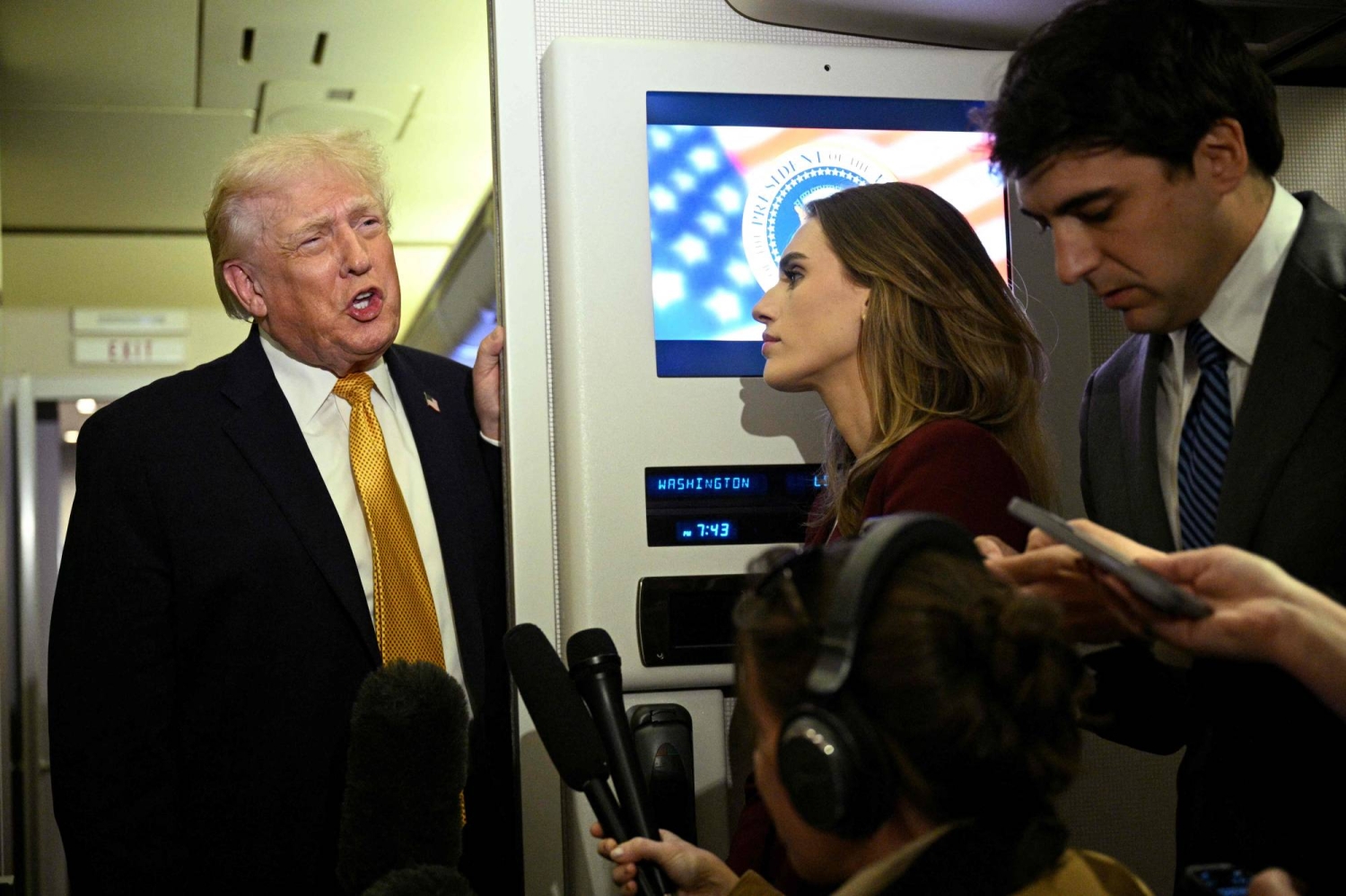
He described Cuba as “ready to fall,” hinting that U.S. involvement there could follow if developments continue. He singled out Colombia and its president, calling the country “very sick” and making accusations about drug trafficking. He warned Mexico to “get its act together” on drug cartels and suggested the U.S. might take action if the situation does not improve. He said, “We need Greenland,” a statement Danish officials strongly rejected as violating sovereignty norms.
These comments show why normalising unilateral threats or actions by powerful states sets a dangerous precedent. If one state’s rhetoric becomes acceptable, then other states might follow the same, weakening the legal norms.
-
Does the UN Charter restrain Powerful States?
The United Nations Charter was born from the ashes of war, drafted with the hope that never again would unipolarity decide the fate of nations. The Charter was never meant to function on goodwill alone. It was designed as a commitment to collective restraint. If the UN Charter cannot restrain the strongest, it risks failing those who need it most.

The International Court of Justice, in the Nicaragua v. United States case, made it unequivocally clear that neither political objectives nor perceived moral justifications can legitimise the use of force or intervention in another state.
International law cannot operate on a selective basis. Its authority depends on consistent application, no matter how powerful a country is. The credibility of the UN Charter ultimately rests on its ability to function as a binding document, rather than a merely existing paper.