


This post is written by Simran Bhaskar, 3rd year B.A LL.B specialization in Energy Law from UPES, Dehradun.
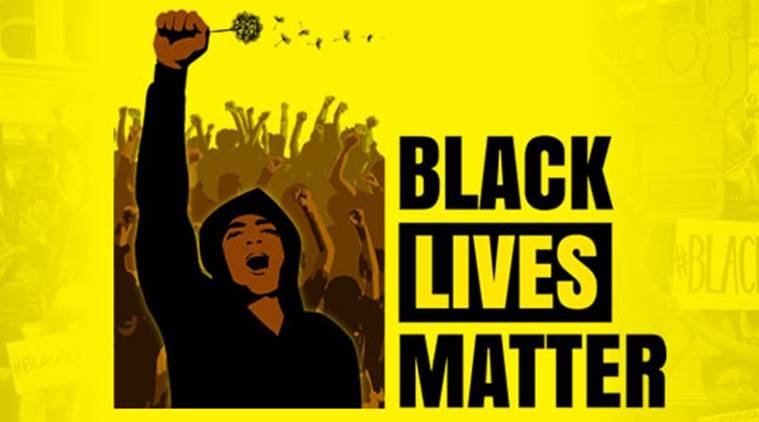
In this article, it has been argued that we should understand #BlackLivesMatter as a claim on the Constitution—a very special kind of constitutional claim, on the Constitution as a fundamental law. It is a paradigmatic contemporary example of this category of constitutional law for citizens, one that reaches back past the roots of the American Revolution and underlies the logic of popular sovereignty at the core of our system.
The idea of Fundamental Law
The notion of fundamental law—as mid-twentieth century historian and philosopher J.W. Gough defines it, a law that “cannot be altered or repealed by ordinary legislative procedure”—is quite an old idea. Gough traces the concept to historical antecedents in Lord Coke’s famous dictum in Dr. Bonham’s Case and the Levellers’ professions of popular sovereignty during the English Civil War. Historians such as Larry Kramer and Gordon Wood detail the significant influence of these precedents over the American Revolution, as well as the American innovation of fundamental law as embodied in a written Constitution.
Conceptual Sketch of Fundamental Law
The fundamental law is, in a sense, both deeper than and prior to its most salient contrast, ordinary law. Ranging from traffic ordinances to complex regulatory schemes, provisions of ordinary law seek to provide action-guidance for the parties bound by its rules. Ordinary law is specific, predictable, and firmly settled by authoritative institutions such as courts. By contrast, the domain of fundamental law contains far more controversy—a function of citizens’ capacity to apprehend (and disagree about) its meaning through their common reason. The fundamental law is an old idea, and its proponents have long drawn a distinction not just with ordinary law, but also with natural law—understood as a kind of universal reason whose principles are binding on all of humankind, without regard to the positive enactments of any particular jurisdiction. Whereas natural law emanates from general reason and pure abstraction,[1] claims of fundamental law apply to (and through) the extant institutions of positive law. Historian Suzanna Sherry thus aptly describes the concept of fundamental law in the pre-constitutional era as a kind of “custom mediated by reason.” Basic principles of the fundamental law are part of what constitutes a system of institutions. Examples abound throughout our history.
The Constitution, as fundamental law, is the citizens’ document. As citizens continue to interpret and deliberate together about what it means, the Constitution endures. In James Wilson’s memorable phrase, for the sovereign people, the Constitution’s meaning is “clay in the hands of the potter.”
Provisions and Principles of Fundamental Law Many constitutional provisions are open-textured and lack specificity, invoking abstract principles. Some examples include the Eighth Amendment’s provision against “cruel and unusual punishment,” the standard of “high crimes and misdemeanors” governing impeachment, and the Fourth Amendment’s guarantee against excessive or “unreasonable” force. They also encompass the unifying purposes of the Preamble that pervade our political discourse. Determining the proper meaning and application of these provisions requires substantial interpretive argument and moral disagreement. Of course, this does not mean that the Constitution settles nothing at all or that it avoids specific language entirely. Unmistakably, many other provisions are hard-wired rules, such as the equal representation of states in the Senate, the fixed qualifications for who may serve as a Representative or the procedures for the Electoral College. As Christopher Eisgruber observes, establishing institutions for democratic self-government requires some degree of specificity, detail, and settlement. Otherwise, “if a polity is consumed with endless debates about how to structure its basic institutions, it will be unable to formulate policy” or govern itself in any way. This is a powerful democratic argument for constitutional entrenchment. By answering these procedural questions and removing them from the domain of political argument, constitutional specificity makes democratic decision making possible.[2]
“Black Lives Matter” as a Mediating Principle When we claim that Black Lives Matter is a claim on the Constitution, I mean that it operates as what Owen Fiss has called a “mediating principle.” These principles are “mediating because they ‘stand between’ the courts and the Constitution—to give meaning and context to an ideal embodied in the text.”66 Indeed, these principles are so pivotal that they “give the provision its only meaning as a guide for decision.” As Fiss notes, these principles are “only a judicial gloss, open to revaluation and redefinition in a way that the text of the Constitution is not.” Other interpretive decision-makers must invariably draw on mediating principles as well, in precisely the same way. Mediating principles bring particularity to the abstract provisions of the Constitution in order to breathe life into them. Fundamental law provisions, because they are general and abstract, invite this sort of particularizing function whenever they bubble up in constitutional.[3]
One category of mediating principles familiar from the constitutional theory literature is the relation between a concept and competing conceptions of that concept. Ronald Dworkin first applied the distinction between a concept and a conception to the abstract clauses of the Constitution in a 1972 essay. If I ask you to treat someone “fairly,” Dworkin suggests, that abstract concept alone cannot supply you with very much guidance for what you ought to do. You can only arrive at that particularized decision by drawing on some conception of fairness—that it requires equality (but of what?), etc.—a conception that is either categorically superior to other interpretations or is at least the most fitting under the circumstances. We may disagree a great deal about what fairness requires in particular cases. But when we do, we also know that we are disagreeing about the same thing. This disagreement is, moreover, what Dworkin would later call a “theoretical disagreement,”[4] one that is more substantive and well-grounded than a mere semantic disagreement that rests on some misapprehension of common terms—like a dispute over “where the nearest bank is” when one party means a financial institution while the other means a riverbank.
[1] https://www.newyorker.com/news/q-and-a/a-black-lives-matter-co-founder-explains-why-this-time-is-different
[2] DWORKIN, supra note 53, at 131, 134-135. Dworkin would continue to refine his interpretivism, which is most fully explicated in RONALD DWORKIN, LAW’S EMPIRE (1986).
[3] Compare Thomas Scanlon, A Theory of Freedom of Expression, 1 PHIL. & PUB. AFFS. 204 (1972), with ALEXANDER MEIKLEJOHN, FREE SPEECH AND ITS RELATION TO SELF-GOVERNMENT (1948).
[4] Id. Cf. Reva B. Siegel, From Colorblindness to Antibalkanization: An Emerging Ground of Decision in Race Equality Cases, 120 YALE L. J. 1278 (2011) (providing a slightly different characterization of these competing principles and introducing a third that traces the Powell-O’Connor-Kennedy line). See also K. ANTHONY APPIAH & AMY GUTMANN, COLOR CONSCIOUS: THE POLITICAL MORALITY OF RACE (1996) (offering an analysis and comparison of colorblind and color-conscious theories of the Constitution)
Image from https://capitalandmain.com/black-lives-matter-fights-brutality-and-backlash-0714